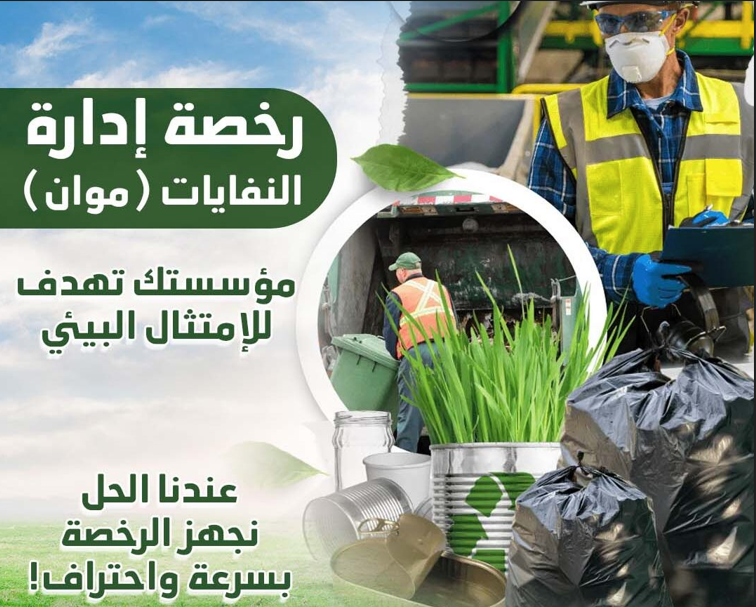
Recycling is a fast-growing sector in Saudi Arabia and at the same time one of the most regulated: the Waste Management Law puts recycling at the top of waste management priorities, but it does not allow any facility to carry out a waste-related activity before it is licensed. If you are planning a recycling or waste sorting center, this article explains the license required, the facility's environmental permit, operating obligations and the mistakes that end in suspension.
Recycling in the Waste Management Law
The law defines recycling as converting certain waste components into usable materials for recovery or as raw materials in manufacturing, and defines sorting as separating waste components manually or mechanically, such as paper, glass and metals, at transfer stations or sorting and treatment facilities. Anyone carrying out a waste management activity must deliver the best environmental and economic results according to these priorities: recycling, then resource recovery, then safe disposal.
Two files, not one
| File | Authority | What it covers |
|---|---|---|
| Waste management license or permit | National Center for Waste Management (MWAN) | The collection, transport, sorting, storage, treatment or recycling activity itself |
| Environmental construction and operating permit | National Center for Environmental Compliance (NCEC) | The facility's impact on the environment: dust, noise, water, soil, fire |
The law states that no waste management activity may be carried out without a license or permit from MWAN, according to the conditions of each activity. It specifically defines the "permit" as a document granted by MWAN to waste recycling facilities confirming they meet its controls and conditions before they obtain the licenses issued by other competent authorities.
Service provider obligations under the law
- Dispose of waste by the methods set by MWAN and the regulation.
- Verify information about incoming waste, complete the register and transport document, and ensure the waste falls within its licensed scope.
- Meet transport document requirements for transport, storage, treatment and disposal providers.
- Accept any type of waste within its licensed scope, for treatment, recycling and disposal providers.
- Notify MWAN of emergencies or serious errors and submit a report on causes, measures taken and effects.
- Provide a financial guarantee or insurance covering civil liability when licensed to operate a waste management facility, as set by the regulation.
What is looked at environmentally in a recycling center
- Sources, types and quantities of incoming waste, and whether they fall within the license scope.
- Temporary storage: preventing dispersion and leaks, separating types and keeping safe stacking heights.
- Fire: storing large quantities of plastic, paper and cardboard requires layout and safety measures in the plan.
- Dust and noise: from baling, shredding and loading; the Noise Regulation sets 70 dB by day and 65 dB at night at the boundary in industrial areas, and the Air Quality Regulation requires precautions against airborne material during transport and loading.
- Water: wash water from materials or floors may carry pollutants that need treatment before discharge.
- Rejects: what cannot be recycled after sorting goes to licensed parties for final disposal, with quantities documented.
Mistakes that end in suspension
- Starting operations before the license is issued, hoping to complete it later.
- Accepting waste types outside the license scope, such as hazardous waste at a center licensed for general waste.
- Piling materials without order, raising fire risk.
- No records of incoming and outgoing materials or transport documents.
- Disposing of rejects on vacant land or by open burning.
Under the law, the Minister or a delegate may suspend an activity partly or fully for up to thirty days when a violation requires urgent action to prevent a disaster. Disposing of waste in a way that endangers public health or harms the environment is punishable by imprisonment of up to ten years and a fine of up to SAR 30 million, or either. Published data indicate that MWAN carried out more than 6,500 inspection rounds in 2023 and recorded 1,640 violating facilities.
Frequently Asked Questions about Recycling Centers
Can I start recycling and apply for the license later?
No. The Waste Management Law states that no waste management activity may be carried out without a license or permit from MWAN.
What is the difference between the MWAN license and the environmental permit?
The MWAN license covers the waste activity itself; the NCEC environmental permit covers the facility's impact on the environment. A recycling center usually needs both.
How should rejects be handled after sorting?
They are handed to licensed providers for safe disposal, with quantities documented in the facility's records and transport documents.
Do I need insurance or a financial guarantee?
The law requires a provider operating a waste management facility to submit a financial guarantee or insurance covering its civil liability when licensed, as set by the regulation.
How Abak Green helps
We identify the right license and scope for your activity, prepare the MWAN license file, waste management plan and technical documents, manage the facility's environmental permit, and set up storage, records and emergency procedures. Contact us about your recycling project.