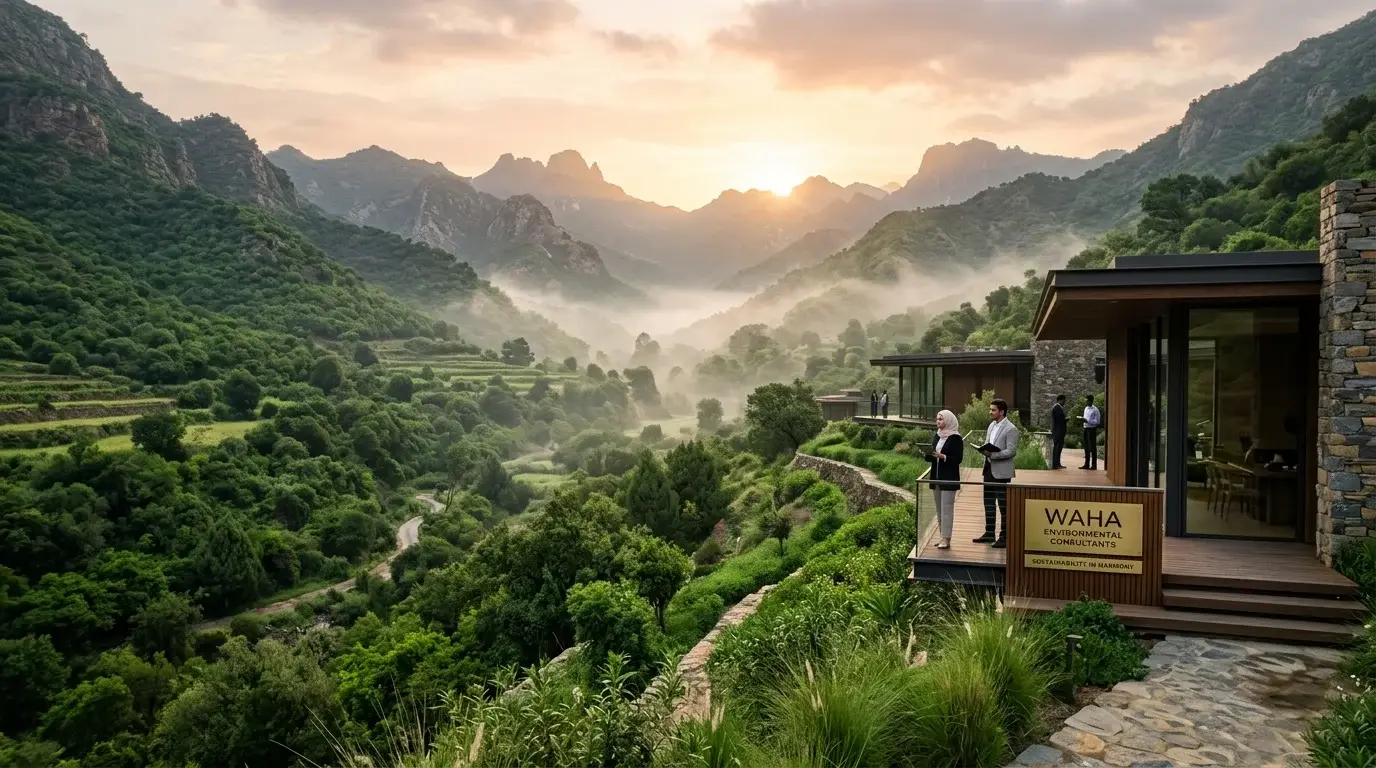
Green buildings are buildings designed, constructed, and operated to reduce their environmental impact: lower energy and water consumption, less harmful materials, less waste, and a healthier indoor environment for occupants.
They are especially important in Saudi Arabia: a study from King Fahd University of Petroleum and Minerals indicates that buildings account for nearly 80% of total electricity consumption in the Kingdom. This makes building efficiency one of the most effective tools for reducing both emissions and costs.
Three Pathways to Green Buildings in Saudi Arabia
| Pathway | Type | Authority | Mandatory Status |
|---|---|---|---|
| Saudi Green Building Code (SBC 1001) | A regulatory code within the Saudi Building Code | Saudi Building Code National Committee | Part of the building code framework |
| Mostadam | A national rating system | Sustainable Building Program, Ministry of Municipalities and Housing | Voluntary |
| LEED | An international rating system | U.S. Green Building Council (USGBC) | Voluntary |
What Is LEED Certification?
LEED (Leadership in Energy and Environmental Design) is the world's best-known green building rating system, developed by the U.S. Green Building Council (USGBC). It evaluates buildings using a points-based system across several categories, including location and transportation, water efficiency, energy and atmosphere, materials and resources, indoor environmental quality, and innovation.
LEED certification levels:
| Level | Rank |
|---|---|
| Certified (Certified) | First level: 40 to 49 points |
| Silver (Silver) | Second: 50 to 59 points |
| Gold (Gold) | Third: 60 to 79 points |
| Platinum (Platinum) | Highest: 80 points or more |
The latest version is LEED v5, which is available for new buildings, interior design, and operations and maintenance, and introduces additional requirements for the Platinum level.
Steps to Obtain LEED Certification
- Select the appropriate rating system: For new buildings, interior design, or the operation and maintenance of an existing building.
- Register the project with the certifying body early, before the design is complete.
- Identify target points: Create a list of the credits the project will pursue and the target certification level.
- Integrate requirements into the design, specifications, and contractor agreements.
- Document construction activities: Record materials used, site waste management, and testing.
- Submit documentation for review, followed by certification at the level achieved.
The costliest mistake is considering certification only after the design is complete. Many points are earned or lost through early design decisions.
What Is Mostadam?
Mostadam is Saudi Arabia's national rating system for sustainable buildings, part of the Sustainable Building Program under the Ministry of Municipalities and Housing. It was developed to align with the Saudi Building Code and the specific characteristics of the local climate and environment.
| Feature | Details |
|---|---|
| What it evaluates | Residential and commercial buildings and urban communities, during design and construction or operations and maintenance |
| Categories | Energy efficiency, water management, health and comfort, materials and waste, connectivity and transportation, management and operations, and innovation |
| Levels | Five levels, from Green to Diamond |
| International recognition | The program has been a member of the World Green Building Council (WorldGBC) since 2023 |
LEED or Mostadam: Which Should You Choose?
| Comparison Criterion | LEED | Mostadam |
|---|---|---|
| Framework | International (U.S.) | Saudi national |
| Alignment with the local code | Requires alignment | Based on the Saudi Building Code |
| Recognition among international investors | Very widespread | Growing |
| Consideration of the local climate | General | Designed for the Saudi environment |
| Suitable for | Projects with international investors or tenants | Local, government, and residential projects |
Some major projects obtain both certifications.
Examples by Building Type
Warehouses and Industrial Buildings
Large roof areas are suitable for solar power, while natural light from roof openings reduces daytime electricity use. Thermal insulation is the most important consideration for refrigerated warehouses.
Office Buildings
Air conditioning and lighting are the largest energy consumers. Smart control systems and climate-appropriate glazing reduce consumption and improve employee comfort.
Hospitals
Hospitals operate continuously and have strict indoor air quality requirements. Water and energy efficiency increase savings, but must not compromise infection control requirements.
Residential Compounds
Key measures include water-efficient fixtures and irrigation, waste separation at the source, and shaded green spaces. Read Environmental Requirements for Residential Compounds.
Benefits of Green Buildings for Owners
- Lower operating bills: Energy and water are a building's two largest operating costs.
- Higher market and rental value: Major tenants prefer certified buildings.
- A better indoor environment: Cleaner air, natural light, and thermal comfort.
- Support for sustainability reporting: A certified building is a strong indicator in an ESG report.
- A smaller carbon footprint: Buildings are a major component of any company's Scope 2 emissions.
Green Buildings and Project Environmental Requirements
LEED or Mostadam certification does not replace a project's statutory environmental requirements. A construction project typically needs:
- An environmental construction permit from the National Center for Environmental Compliance, depending on the activity category.
- Compliance with dust control requirements during excavation and construction, under the Executive Regulations for Air Quality.
- Compliance with noise limits and permitted hours at construction sites, under the Executive Regulations for Noise.
- Management of construction and demolition waste through entities licensed by the National Center for Waste Management (MWAN).
Common Mistakes in Certification Projects
- Delaying the decision: Adding certification after the design stage makes every point more expensive.
- Using a contractor unfamiliar with the requirements: If the requirements are not included in the contract, materials and site waste will not be documented as required.
- Focusing on points rather than performance: A building that earns certification but is then operated without ongoing monitoring loses most of its potential savings.
- Forgetting statutory requirements: Certification is voluntary, while environmental permits, dust controls, and construction waste requirements remain mandatory regardless.
Project Startup Checklist
- We have decided whether to pursue certification, which system to use, and which level to target.
- The architectural and mechanical consultants understand the requirements from the first drawing.
- Material and site waste requirements are included in the contractor's agreement.
- The environmental construction permit is ready or being processed, depending on the project category.
- A plan is in place to measure energy and water consumption once operations begin.
How Do You Measure Building Savings After Operations Begin?
Certification evaluates design and construction, but savings show up in utility bills. To determine whether a building is performing as designed:
- Install submeters: Meter air conditioning, lighting, and water separately rather than using a single meter for the building.
- Use a per-square-meter metric: Divide electricity and water consumption by floor area to compare buildings and years.
- Make monthly comparisons: Compare each month with the same month in the previous year, since summer and winter differ significantly.
- Link results to the carbon footprint: Electricity savings directly reduce Scope 2 emissions. Read the Corporate Carbon Footprint Guide.
Key Terms
- Rating system: A set of criteria and points used to measure building performance, such as LEED and Mostadam.
- Prerequisite: A mandatory requirement in a rating system without which certification cannot be awarded, unlike optional credits that earn points.
- Building code: Regulatory requirements that a building must meet, unlike voluntary rating systems.
- Operational performance: A building's actual consumption after occupancy, which determines its real savings.
How Can Abac Green Help?
We do not provide LEED or Mostadam certifications, but we handle regulatory environmental compliance for your construction project: environmental permitting, the construction site's environmental management plan, and carbon footprint calculations for the building or company. Engineering aspects can be coordinated with our parent company, Abac Engineering Consultants.
Obtaining an Environmental Permit · Carbon Footprint Calculation and ESG · Sustainable Development and the Role of the Private Sector
Frequently Asked Questions About Green Buildings
What are green buildings?
Buildings designed and operated to reduce energy, water, and resource consumption and improve occupants' health.
What are the LEED certification levels?
Four: Certified, Silver, Gold, and Platinum.
What is Mostadam?
Saudi Arabia's national rating system for sustainable buildings, part of the Sustainable Building Program under the Ministry of Municipalities and Housing, with five levels from Green to Diamond.
Is LEED certification mandatory in Saudi Arabia?
No. It is voluntary, as is Mostadam certification. The Saudi Building Code, however, includes regulatory requirements.
What is the difference between LEED and Mostadam?
LEED is an international system, while Mostadam is a national system based on the Saudi Building Code and designed for the local environment.
Does green building certification replace an environmental permit?
No. An environmental permit is a separate statutory requirement for the project.
How many points are needed for LEED certification?
At least 40 points for Certified, 50 for Silver, 60 for Gold, and 80 or more for Platinum, according to the U.S. Green Building Council.
What is the latest version of LEED?
LEED v5, which is available for new buildings, interior design, and operations and maintenance.
When should I decide to pursue green building certification?
Before the design is complete, because most points depend on early design decisions, and incorporating them later is more expensive.
Does a green building project need an environmental permit?
Yes, if the project involves an activity that requires a permit. Green certification is voluntary and does not replace construction and operating permits required for the activity category.
