

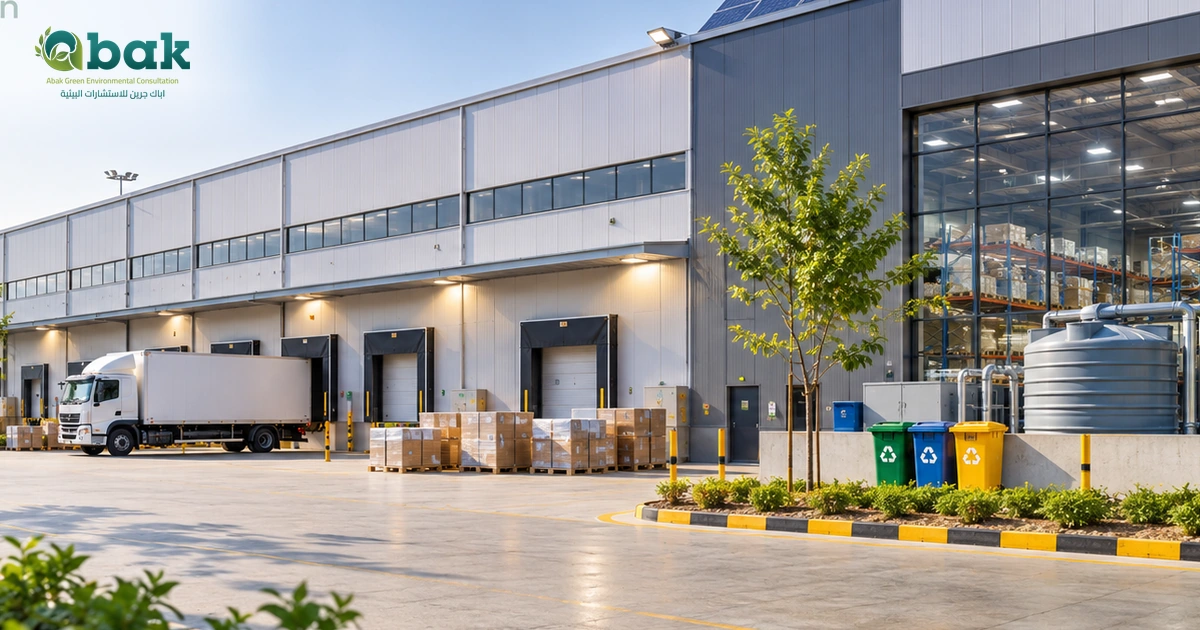
Many owners of warehouses assume that storage is a "clean" activity with no environmental implications. This is sometimes true, but often not; the need for an environmental permit for a warehouse depends on what is stored and how.
What Determines a Warehouse's Requirements?
Under the classification criteria in the Executive Regulations for Environmental Permits, the National Center for Environmental Compliance considers:
- Type of materials stored: General goods, chemicals, flammable materials, or hazardous materials.
- Scale of operations: Floor area, storage quantities, and freight traffic.
- Location: Proximity to homes, schools, or water sources.
- Associated operations: Repacking, packaging, fleet maintenance, or refrigeration.
Chemical and Hazardous Materials Warehouses
This category requires special attention because any leak or fire can affect the soil, air, and surrounding community. Items expected in its environmental documentation include:
- An up-to-date inventory of materials and safety data sheets for each material.
- Storage that separates incompatible materials, with flooring and containment basins that prevent leaks.
- An environmental emergency preparedness and response plan for incidents such as spills or fires.
- Disposal of contaminated empty containers and damaged materials through a transporter licensed by MWAN.
Distribution Centers and Logistics Warehouses
Even a general-purpose warehouse can have environmental impacts: a truck fleet and generators, large quantities of packaging waste, and an equipment maintenance area. These details are considered when assessing the activity and require management and recordkeeping.
A Common Mistake: Changing What Is Stored
A warehouse obtains a permit to store general goods, then begins storing chemicals for a new client. This changes the type of activity, and the regulations require a new operating permit before any change to the type or scale of the activity.
How Abak Green Can Help
We review what is stored in your warehouse, its operations, and its location; identify the requirements; and prepare the permit documentation, environmental management plan, emergency plan, and records. Request a review of your warehouse.