

Auto workshops are among the most common businesses in commercial and industrial districts. They are also particularly likely to receive environmental inspection findings if workshop environmental requirements are neglected, because their environmental impacts are clear: oils, grease, contaminated water, and damaged spare parts. If you are looking for an environmental permit for an auto workshop, here is what you need to know.
Does your workshop need an environmental permit? In most cases, yes. The Implementing Regulations for Environmental Permits cover any commercial or service establishment expected to have environmental impacts, and workshops are among the activities that generate the most used oil, hazardous waste, and noise.
More importantly, smaller establishments with lower environmental impacts account for the most violations. In the third quarter of 2026, they accounted for 73% of recorded violations, primarily due to failing to obtain environmental permits.
Why Do Workshops Require Environmental Permits?
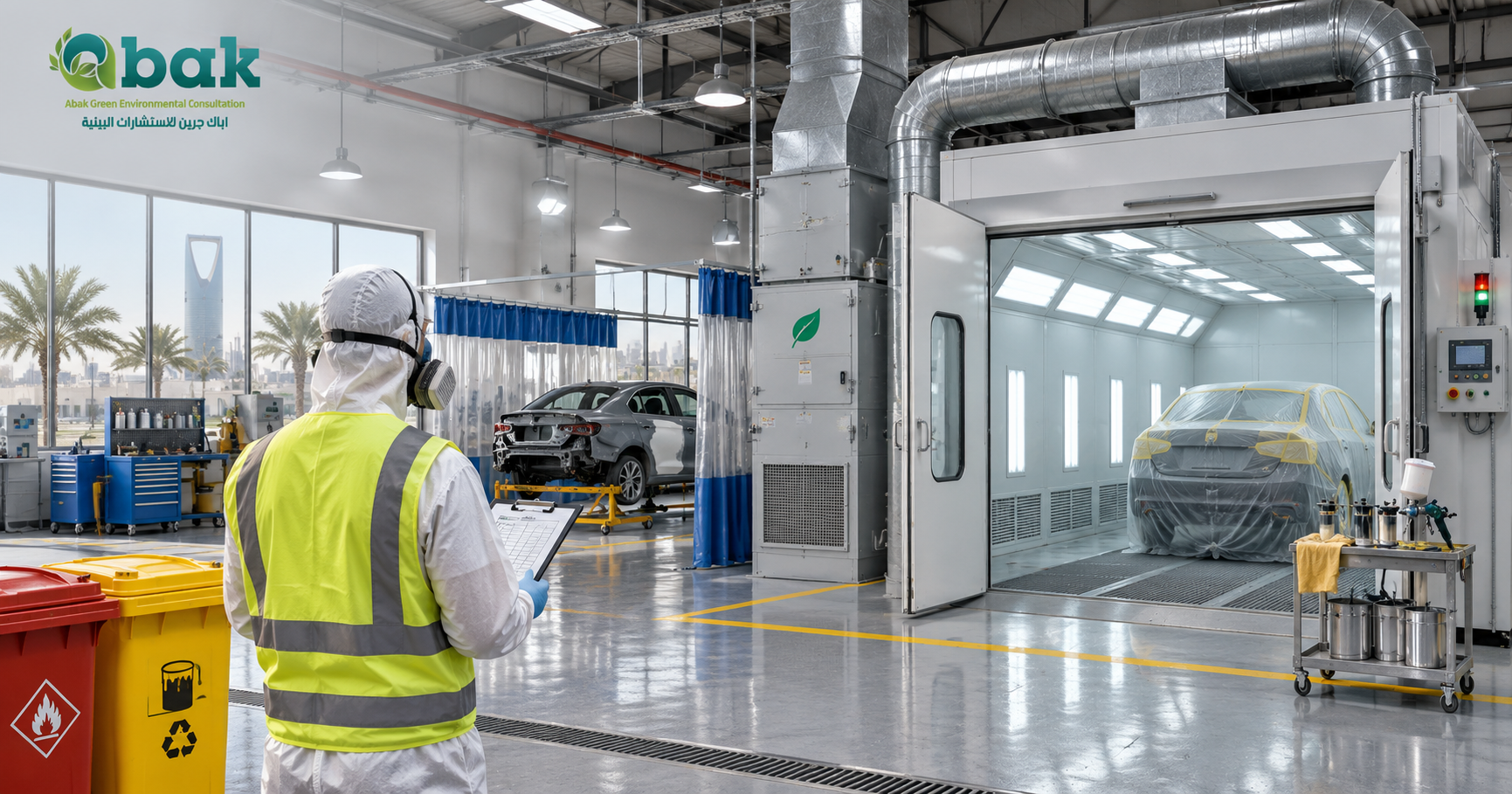
The Implementing Regulations for Environmental Permits apply to every commercial or service activity expected to have an environmental impact. Workshops typically generate:
- Used engine oil and oil filters.
- Wash water mixed with oils and detergents.
- Damaged batteries, coolant, and brake fluid.
- Paint fumes from auto body and paint workshops.
A workshop's environmental category is determined by the National Center for Environmental Compliance after reviewing the classification form. Its size, activities, and location influence the classification.
Used Oil: The Most Frequently Questioned Issue
Do not dispose of used oil or filters with general waste or down drains. Store them in sealed containers on an impermeable surface, hand them over to a transporter licensed by the National Center for Waste Management (MWAN), and keep documentation of each handover in your environmental register. MWAN's requirements prohibit transporters from delivering hazardous waste to any facility that is not licensed, helping protect you when you are asked where your waste ends up.
Car Washes
The main issue here is wash water. A system that separates oil and sediment before discharge, along with its maintenance and cleaning records, is among the first things inspectors examine. High water consumption is also a factor in the activity's environmental assessment.
The Most Common Workshop Inspection Findings
- Operating a workshop without a valid environmental permit.
- Storing used oil in open drums or on bare soil.
- Lacking documentation showing that oil was handed over to a licensed transporter.
- Discharging contaminated water without treatment.
- Adding an activity, such as painting, that was not covered by the permit.
Which Workshops and Shops Need an Environmental Permit?
| Activity Type | Why It Needs a Permit |
|---|---|
| Auto maintenance and oil change workshops | Used oil, filters, batteries, and coolant |
| Auto body and paint workshops | Fumes, solvents, and paint waste |
| Metalworking workshops | Noise, metal dust, and welding waste |
| Carpentry workshops | Wood dust, adhesives, and paints |
| Car washes | Wastewater contaminated with oils and detergents |
| Tire and battery shops | Used tires and batteries |
| Print shops | Inks and solvents |
The category of each activity is determined after the Center reviews the classification form, based on the workshop's size, location, and surroundings . Small workshops are often classified as Category I.
Environmental Requirements for Workshops: The Essentials
1. Managing Used Oil and Hazardous Waste Used oil, filters, batteries, and paint waste are hazardous waste. They must be stored safely on a temporary basis and handed over to an entity licensed by the National Center for Waste Management (MWAN) for the activity of “collecting and transporting used oil waste” or “battery waste,” with handover documentation retained.
2. Preventing Oil from Leaking into Soil and Drains Use impermeable flooring in work areas and oil containment basins or traps, and do not discharge oil into the drainage network or onto the ground. Soil contamination will require you to rehabilitate the site later.
3. Noise and Fumes These are particularly important in metalworking and paint workshops, especially near homes, schools, or hospitals, which are considered “sensitive receptors” under the regulations.
4. Records Maintain a record of hazardous waste, its quantities, handover dates, and the receiving entity.
Steps to Obtain an Environmental Permit for a Workshop
- Complete the environmental classification form with the workshop's details: activity, location, area, materials used, and energy use.
- Receive the classification decision within 10 business days. The form review fee is SAR 500.
- Have an environmental management plan prepared by a licensed service provider if the workshop is classified as Category I, along with a rehabilitation plan if the activity is included in the relevant list.
- Apply through the permits platform and pay the fee: SAR 1,000 for a Category I construction permit.
- Receive the permit within 15 days for Category I.
- Implement the requirements and retain records.
My Workshop Has Operated for Years Without a Permit. What Should I Do?
The Center offers an “Operating Permit for Owners of Projects Previously Established Without a Construction Permit” service. Its requirements vary by category: an environmental management plan for Category I, or an environmental audit study for Categories II and III. Voluntarily addressing noncompliance is far better than waiting for an inspection.
Fines for Workshops Operating Without a Permit
| Violation | Category I |
|---|---|
| Conducting an activity without an environmental permit | SAR 5,000 |
| Operating without a valid operating permit | SAR 10,000 |
| Failing to comply with permit conditions | SAR 1,000 per condition |
| Failing to comply with the environmental management plan | SAR 500 per requirement |
These fines are in addition to correcting the violation and repairing the damage, such as treating oil-contaminated soil.
A Quick Checklist for Workshop Owners
- [ ] I have a valid environmental permit for operation.
- [ ] Oils and batteries are handed over to an entity licensed by MWAN, and I have the handover documents.
- [ ] The work area has impermeable flooring, and oil is not discharged into drains.
- [ ] I maintain a hazardous waste register.
- [ ] I implement the approved environmental management plan.
- [ ] I have not expanded the workshop or added an activity without approval.
Frequently Asked Questions About Environmental Permits for Workshops
Does a Small Auto Workshop Need an Environmental Permit?
Yes. Any service establishment with expected environmental impacts needs a permit, and workshops generate oils and hazardous waste.
What Category Do Auto Workshops Fall Under?
The Center determines the category after reviewing the classification form. Small workshops are often classified as Category I.
How Much Does an Environmental Permit for a Workshop Cost?
For Category I: SAR 500 for reviewing the form and SAR 1,000 for the construction permit, plus the cost of preparing the environmental management plan.
What Should I Do with Used Oil?
Store it safely and hand it over to an entity licensed by MWAN to collect and transport used oil, retaining the handover documentation.
My Workshop Is Already Operating Without a Permit. Can I Regularize Its Status?
Yes, through the operating permit service for previously established projects.
Is a Municipal License Enough?
No. The environmental permit issued by the National Center for Environmental Compliance is separate from municipal licenses.
Official Sources
- Implementing Regulations for Environmental Permits for the Construction and Operation of Activities (Umm Al-Qura)
- Operating Permit Service for Existing Projects Without a Construction Permit
- Technical Requirements for MWAN Licenses: Oil and Battery Collection and Transport Activities
- Al-Madina Newspaper: Third-Quarter 2026 Violations
How Abak Green Can Help
We visit your workshop, identify the requirements based on its activities, prepare the environmental permit application, environmental management plan, and records, and follow up until the permit is issued. Request a visit to your workshop.
We handle your workshop's application from the classification form through permit issuance, prepare the environmental management plan, and set up waste records. Because small workshops need a prompt solution with clear costs, we start with a preliminary review of your activity.
Obtaining an Environmental Permit · Auto Workshops · Send your workshop type and location for a preliminary review